Wolt Alternative and Uber Eats Alternative: Ways out of portal dependency
Are you paying high commissions to delivery platforms month after month while margins are shrinking and you still never know for sure how many orders will come in? That's exactly where the search for a real Wolt alternative begins - and therefore automatically for an Uber Eats alternative. The goal is clear: less dependency, more control, more profit per order.
Portals like Wolt or Uber Eats give you short-term reach, but at the same time they gradually take the direct customer relationship out of your hands. In the portal system, the customer does not belong to you, but to the platform.
If you want to know how to get out of this addiction, the next step is simple: Check numbers, compare options, draw up a plan. If you want to go through this in a structured way: Book a demo and together we will see which Wolt alternative is realistic for your company.
Why restaurants are considering a Wolt alternative (and why the Uber Eats alternative is coming along)
If you have one today Wolt alternative If you think about it, you'll automatically land that one too Uber Eats alternative with on the table. This is not due to individual portals, but rather to the model behind them: commission-driven platforms that control the customer interface.
As long as you sell primarily via these portals, you determine neither the rules of the game nor the planning security. And that's exactly why good Wolt alternatives are not about "another portal", but about a setup that makes you more operationally and economically independent.
Experience from customer discussions: similar to Lieferando (no official information)
In conversations with restaurateurs, we have seen the same pattern for years: the portal is a blessing at the beginning, but later it becomes a question of costs and dependency. As Experience value (no official information) we often know the situation similar to Lieferando: As the volume increases, the total costs (commissions and possible additional services) become noticeable, while control over the customer remains low.
After 6 to 18 months of portal operation, many operators seriously consider a Wolt alternative: At the beginning, the joy of additional orders predominates. Things tip over later when billings rise, visibility fluctuates or operational effort increases.
Then many are not just looking for another portal, but a real Uber Eats alternative in the broader sense: a setup that only uses portals as a channel - not as a basis for business.
Immediate problem: commissions, visibility, loss of customer relationships

The dependency arises from three factors together. Not only do they reduce your profits, they also take away your ability to plan and access data - exactly the levers you need for sustainable growth.
- Commissions: They directly reduce the margin – especially for dishes with already tight profit margins.
- Visibility in the portal: Ranking, promotions and paid placements influence your sales. You are dependent on mechanics that you do not control.
- Loss of customer relationship: The guest orders “in the portal”, not “from you”. Without direct contact, it will be difficult to build regular customers, test your own offers or direct repeat orders to a cheaper channel.
A sustainable Wolt alternative must therefore bring back the customer interface: your own ordering channel, your own communication, your own data – cleanly regulated Customer data & data protection.
Which type of business is affected? (Rating scale based on order volume)
The most important thing for the decision is: How big is your portal share of orders and sales? The higher your volume, the greater the impact of commission and variable platform costs - and the more important a reliable direct channel becomes.
- Under approx. 10-15 orders/day: Portals can function as a reach channel. A lean direct channel (at least Click & Collect) is often still worthwhile in order to redirect regular guests cheaply.
- Approx. 15-40 orders/day: There will be one here Hybrid model interesting. You need structure (ordering system + POS integration), otherwise the parallel operation will eat you up.
- 40+ orders/day: From here on, it is almost always worth choosing a consistent Wolt alternative with a strong own channel and either a white label or your own fleet - otherwise the variable platform costs will remain dominant in the long term.
If you want to evaluate your numbers in a structured way (without gut feeling): Book a demo, then we'll work it out with you.
What options are there – advantages and disadvantages
One Wolt alternative is rarely “a provider”. It is usually a mix of: portal(s) for reach, regional delivery services/networks and your own ordering channel as a long-term core.
What's important is less the name than the logic: How do you get out of pure commission dependence - without your sales suddenly collapsing or your business sinking into channel chaos?
Switching to another major portal: advantages and disadvantages
Many companies first think: “Then we’ll just change.” Uber Eats is then seen as a Wolt alternative – or vice versa. This can help in the short term, but only partially solves the basic problem: you stay in the commission model and pass on the customer interface.
Instead of “just changing” there is one Alternating or supplementary logic makes sense so that portals remain a channel - and not your basis.
- Test portals in your region, but set an internal cap on the revenue share per portal.
- Use portals as New customer channel.
- Build yours in parallel Direct channel so that regular customers do not remain “trapped” in the portal.
If you too “Wolt or Lieferando” If you're researching, it's worth checking out our guide Lieferando alternative:
https://gastrosprint.de/ratgeber/lieferando-alternativen-restaurants/
Regional platforms & networks
Regional platforms and delivery services can be a real Uber Eats alternative or Wolt alternative - especially if they are in your area Delivery area are strong and you are better Support than with large ticket systems.
Not only check the range, but also whether the collaboration is stable in everyday life - especially in the case of driver problems, cancellations and complaints.
- Does that fit? Delivery area to your catchment area?
- How are Response times in case of problems (drivers, cancellations, delays)?
- How transparent are billing and responsibilities?
- What does the contract say about data sovereignty and communication?
Regional providers are often more flexible. They do not automatically replace the reach of the large portals, but can be a stable component in your mix.
White label delivery service (brand/fees/customer details)
A White label delivery service delivers on your behalf. The guest orders via your channel (website/app), your brand remains visible, and the logistics run in the background.
This is the most realistic step for many restaurants: You set up direct orders without immediately setting up your own fleet - and without completely giving up the customer interface.
- You strengthen your brand (not the platform brand).
- You build direct orders.
- You can outsource delivery without completely giving up the customer interface.
Important: Clarify in advance how to do this Customer data & data protection, service level, liability and default rules. White label is not magic - but it is often the most practical step between "only portal" and "own fleet".
Own ordering channel / webshop / app
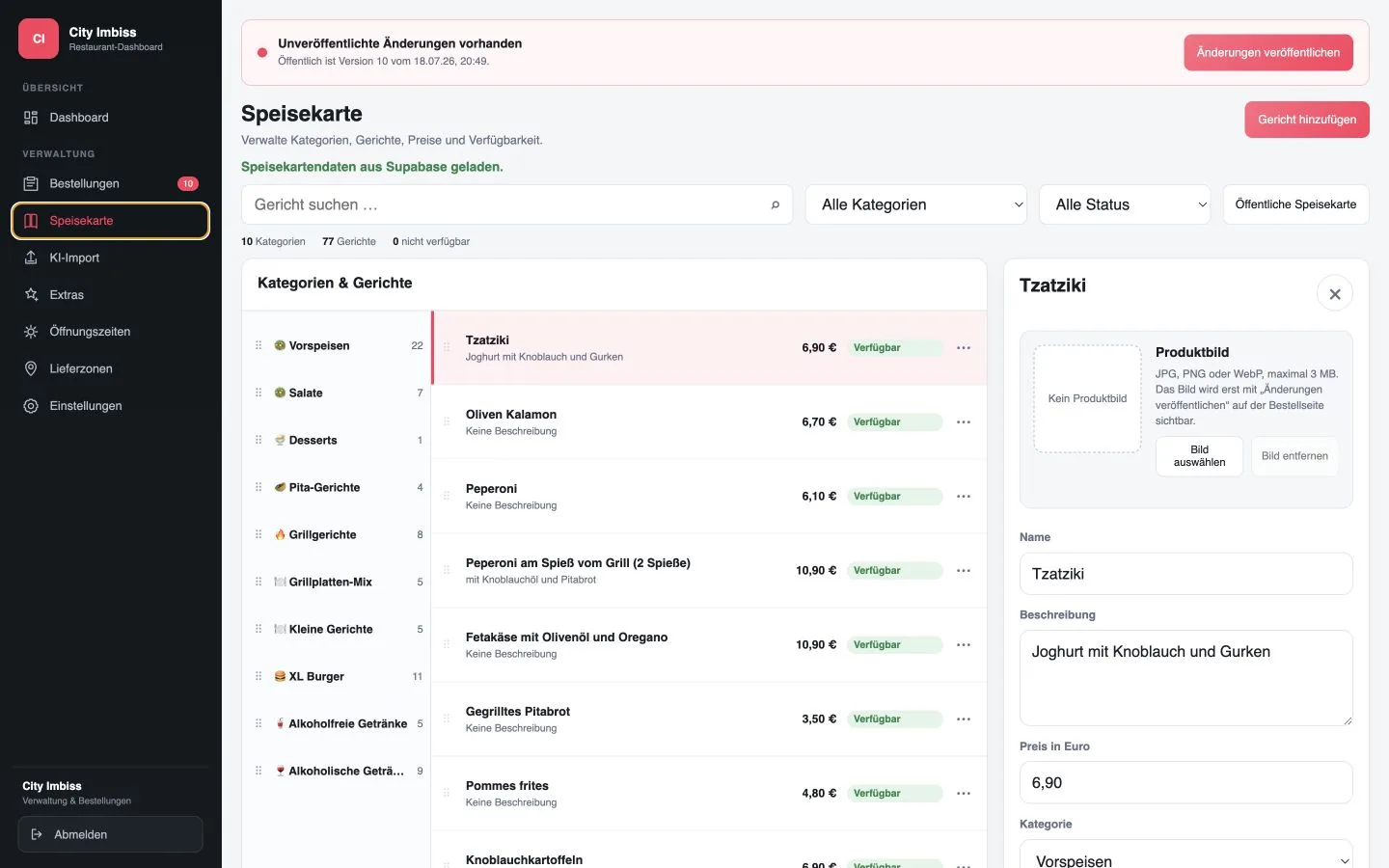
The biggest lever against portal dependency is you own order channel: Website/webshop systems, Click & Collect (pickup) and – if it suits – delivery. Central to this is a clean one Ordering system, which reliably accepts orders, controls them and brings them into the operational system.
For restaurateurs in particular, getting started is often easier than it feels: You don't have to do "everything from scratch" straight away - you need a channel that is used in practice and reduces your costs per order.
- Start with Click & Collect (pick up): immediately less commissions, no driver logistics.
- Add delivery later via your own drivers or white label.
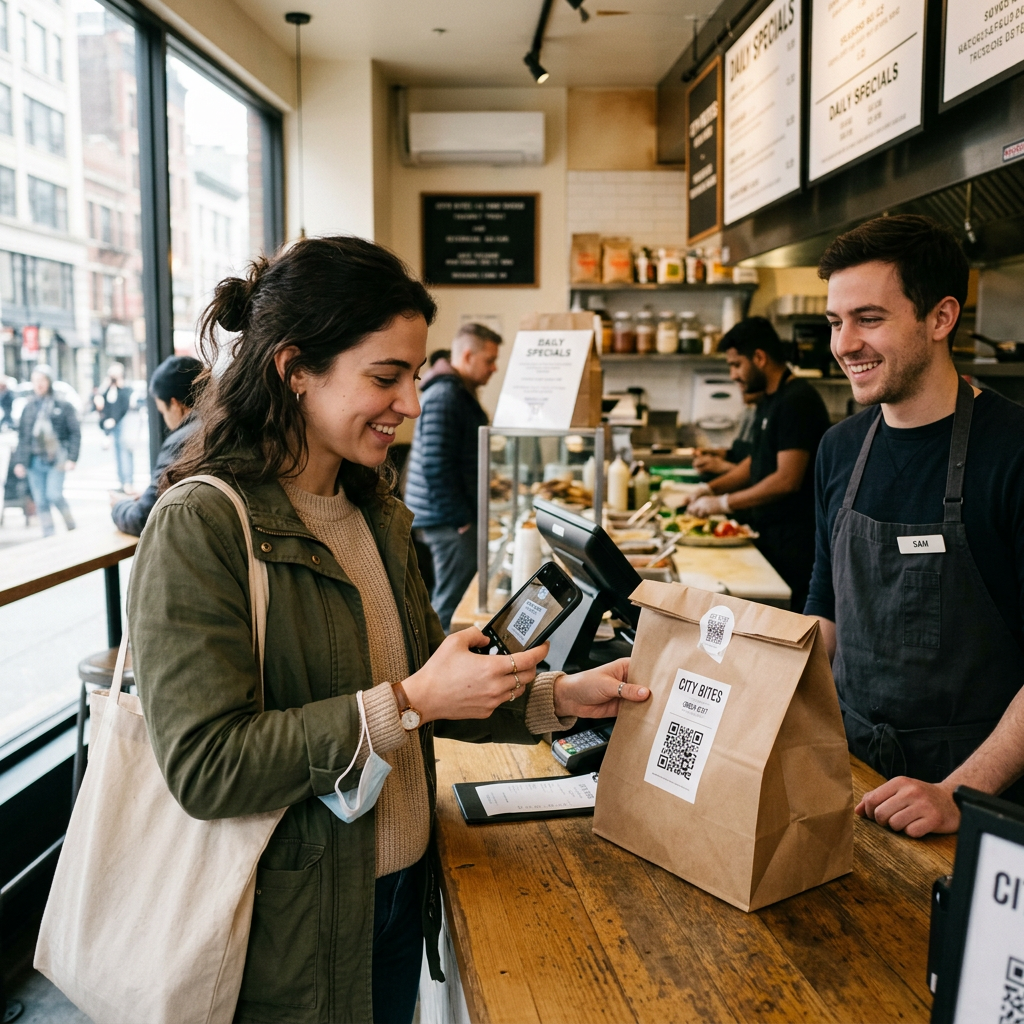
- Actively redirect portal orders (QR codes, flyers, information on the packaging).
GastroSprint supports you with clearly calculable costs:
- 0% GastroSprint order commission
- Entry from €64 net/month
- Own app from the Growth plan for €119 net
For market comparison (if you are currently evaluating):
GastroSprint vs Wolt: https://gastrosprint.de/vergleiche/gastrosprint-vs-wolt/
GastroSprint vs Uber Eats: https://gastrosprint.de/vergleiche/gastrosprint-vs-uber-eats/
As examples in the market (without ranking): Some companies also look at providers/models like FoodAmigos or FoxiFood to get a feel for alternatives, regional coverage or operating models. What matters is not the name, but whether you really improve control, data access and processes.
If you want to set up your own ordering channel (including POS integration), click here plan overview or Book a demo – then we check which setup (Click & Collect / Delivery / White Label) suits your business.
Practical steps when switching or parallel operation
A change or parallel operation is less “marketing” than Business organization. You need technology, processes and clear rules so that orders from portals, websites and telephone don't conflict with each other.
The goal is a setup that relieves your team's everyday workload, reduces errors and gives you back control over orders, times and utilization.
POS integration & order sync (checklist)
Without POS integration Every additional channel becomes a source of error. The goal is: Orders don't arrive on five devices, but rather go centrally - ideally directly to your checkout.
GastroSprint can be used, for example, with the WinOrder POS system integrate.
- Central overview of everything Orders (Portal + own channel).
- Automatic transfer to cash register/kitchen printer.
- Book cancellations/changes cleanly.
- Time slots and utilization can be controlled (so that the kitchen doesn't overflow).
- Uniform item and price maintenance (so you don't have to wait twice).
Driver models (employees vs. freelancers)
The choice of driver model determines costs, liability and service quality. And it determines how stable your delivery service really is in everyday life - especially during peaks, illness or short-term failures.
For many restaurants, a hybrid model works best because it combines control and flexibility - without fixed costs blowing up the calculations.
- Employed drivers: more control, better planning, but fixed costs and personnel expenses.
- Freelancers/Externals: more flexible in peaks, but you have to clearly clarify legal/quality risks.
- Hybrid (often best practice model): core team + peak coverage via partner or white label.
Important: Don’t just calculate “costs per delivery”, but also error costs (complaints), failures and the impact on ratings.
Customer data & data protection: what to consider?
Without clean ones Consents you cannot use customer data sensibly - and without customer data you can hardly get regular customers out of the portal. If you mean an Uber Eats alternative or Wolt alternative in the sense of direct orders, you have to set this topic up properly from the start.
This means that data protection does not become a brake, but rather the basis: you build trust and can still communicate in a legally compliant manner (e.g. newsletter, SMS, push).
- Transparent data protection declaration (website/webshop/app).
- Documented opt-ins (newsletter, SMS, push – only with consent).
- Internal roles and access rights.
- Clear processes for information/deletion.
If you want to set up parallel operation without chaos: Book a demo – we go through POS integration, driver models and data protection in a structured manner.
Decision logic: Which Wolt alternative suits your type of business?
Instead of “best platform”, you need logic that suits your business. The question is: Which combination of portal, regional network and your own channel will bring you stability today – and independence tomorrow?
This is exactly why the classification based on order volume is so practical: It shows you at what point commission and platform mechanics dominate your profit more than any short-term reach.
Small businesses: quickly relieve the burden with Click & Collect and a lean ordering channel
For small businesses, the quickest lever is usually a separate, lean ordering channel that attracts regular customers and makes you less dependent on portal mechanics. At the same time, portals like Wolt can continue to operate as a new customer channel.
- Own ordering channel for regular customers
- Focus on Click & Collect
- Portals continue to serve as new customer feeders
This allows you to reduce commissions without building a driver organization.
Medium-sized companies: Hybrid of portal + own channel, focus on POS integration
A hybrid often works for medium-sized companies: you use 1-2 portals as a reach channel, but build up a direct channel as a growth engine. It is crucial that the operation does not fail due to parallel processes.
- 1-2 portals for reach
- Direct channel as a growth engine
- Hard priority on POS integration and order management
You shift the sales share step by step towards direct orders - without sacrificing sales.
Larger operations: Scaling via white label delivery service or own fleet
For larger companies, delivery is a separate system. Here, “we also deliver” quickly becomes an operational core model – with reporting, shift planning and clear standards so that quality and ratings remain stable.
- own channel (webshop/app) as standard
- White label or own fleet depending on location and personnel market
- Reporting and process standardization
This turns the Wolt alternative into a scalable model in which portals are optional, not existential.
If you want to classify your business type and need concrete next steps: Book a demo or plan overview view. Then you don’t build your alternative “somehow”, but in a planned manner.
Conclusion
A real one Wolt alternative and Uber Eats alternative is not just a change of provider, but a strategy: You use portals specifically for reach, but at the same time you build your own order channel, secure customer data (GDPR-compliant) and keep operations stable through POS integration and clear processes.
If you plan the change carefully, you will have more margin per order - and you will regain control over the brand, customer relationships and predictability.
FAQ
How quickly does a separate ordering channel pay off compared to platforms?
This depends on the order volume and portal share. In practice, it is often enough to move some of the recurring orders (regular customers/corporate customers) into your own channel so that an ordering system with fixed costs quickly becomes worthwhile.
How much does GastroSprint cost exactly?
GastroSprint offers 0% GastroSprint order commission, Entry from €64 net/month, and one Own app from the Growth plan for €119 net.
Can I run an ordering system parallel to Wolt and Uber Eats?
Yes. Parallel operation is the most realistic option for many restaurants: portals for reach, a separate channel for regular customers. Good order management and clean POS integration are important.
Which POS integration do I need so that orders run smoothly in sync?
You need a connection in which online orders automatically arrive in your checkout, items/prices remain synchronized and cancellations are processed correctly. The fewer manual steps, the fewer errors and stress.
GastroSprint is with that WinOrder POS system integrated. Further cash register integrations are planned. Just ask us about your cash register - we will discuss with you which connection is possible for your business.
Who owns customer data and what do I have to consider when it comes to data protection?
For portal orders, customer data is usually primarily stored on the portal. When ordering directly via your own channel, you can legally use customer data if you provide transparent information and properly obtain consent.
Data protection declarations, documented opt-ins and clear internal access rights are important.
If you want to build a Wolt alternative that works in everyday life (instead of just on paper): Book a demo or the plan overview view. We help you find the best combination of ordering system, POS integration and logistics for your business.
Sources and product basis
- Wolt for restaurantsOfficial classification of the Wolt marketplace, order management and commission model.Retrieved on
- Uber DirectOfficial classification of external delivery for orders via own channels; no statement about a GastroSprint connection.Retrieved on
- GastroSprint pricesplan overview for direct and growth; Basis of the monthly prices mentioned in the article.Retrieved on